In the inexorable march of time we must recognize the very real probability that we will be assisting in the creation and furthering of the evolutionary process throughout the world. The largest and most prominent of these leaps into the future is that of the realm of sentient machines. This is of great importance, the discussion of robotic rights, as it will bleed into our own. For I believe that how we shall treat our mechanical decadence will have lasting consequences; not just for us, but for them as well.
Androids are coming, like it or not, and we will soon be forced to confront this very real truth. This is going to open a Pandora's box of issues that humans have never been faced with before. How will we deal with this? What rights will robots get? How will we survive the transition? Will this end civilization as we can understand it? What will we do? Can we coexist? What will the economy look like? Too many questions to even conceive.
But let us confront this, labor will dry up, nearly all labor will dry up, it will be automated, all of it; what economy is this? Let us be perfectly clear, what economy that we can recognize could survive such a change? Capitalism, without paid workers, is dead. How can capitalism survive in this? The slave labor of robotics will make money anachronistic, we won't need it, why would we? Robots will do it faster, they'll do it better, sure perhaps at first some people may be able to out perform, but technology only gains in speed; what will become of the human worker? Why would we require money?
Another issue, what happens when the robots are sentient? Will they demand rights? If they do, do we dare deny them? Do we pay them? Do we make concessions? How do we work with them? Now I know that people will say "Do not personify the machines" but the problem is that personification is an inevitable part of the human condition, we personify things because it is in our nature to see ourselves in others; be they animal or inanimate. Scientists will personify androids, because human like bots will be much more comfortable to be around than non-human like bots. This does not mean they will be identical, but rather have human like appearances and emotions; more and more so with time. We will make them be this way, and in return they will, in some ways, be like us.
What do we do with the mass of people unable to keep up? Do we modify them to keep up? Do we make people machine like? Do we make machines slaves to people? How do we ration in a world where people are obsolete? This entire conundrum creates a system of mass problematic issues. All of a sudden we are placed into a tight spot and find ourselves trapped, money seems archaic, it seems a terrible thing to try to keep as a system of rationing. If people cannot work, and if they can it will be small amounts of work available, than how will we even have an 'economy' as we can understand it? Automation will consume work, and what will be left for the masses to fight over, scraps of useful positions soon to be automated? None of this makes sense to maintain a system like this.
How will we function? If and when robots gain in numbers, they will be certainly a very numerable lot, and then we will find ourselves in a whole new world. If they want things, dare we deny? And how will we function? If they want freedom, how will our society work? Will they work for pay, but how will we live? If they live as 'productive' members of society, how will we, will we be pets? Will all be provided for and no money required? Can we make a world that can function based solely on people being people and doing as they wish without any 'work for pay' incentive? For if the society changes this much after the introduction of homo-machina into our social ecosystem, than we will be at a loss.
Such questions require answers, yet I find most of them impossible to conceive of. I do not know what it would look like, what could it possibly look like? Transhumanism may be a slight answer to help humanity keep pace, but for what? To keep the old economy alive? We have not even begun to question these things, let alone answer them, and these problems are coming, we will face them; should climate change not kill us all. How will we deal with these very problems, and innumerable more that I cannot even conceive? We are going to be at a loss when we create Homo-Machina and then realize that our descendant is going to completely change our world; for good or ill.
Sunday, February 28, 2016


Tuesday, February 16, 2016
"The Color That You See" By. Kaden Moeller

A poetic work for the ages, the 21st century epic; the Millennial dialectic supreme! Come and witness the death of the American Dream and the birth of something new. Let the phoenix rise and the ash wash off as we dance twixt the pages of poetry to discover life anew! Let us gaze upon the old and give birth to the new, come, let us change the world.
To Cull The Living Flower
I've made a necklace for you
From the flowers of life's garden
Twas to console your hear, so blue
And lift your spirit, fallen
Oh you did love this gift
But before your shoulders settled
Life's fingers, they did lift
And pluck away the petals
Oh this twas to your horror
This gift, so beautiful
Your scream "Please take no more!"
As time rips them in handfuls
Each petal for you, lost
It rends and breaks your heart
It seems to high a cost
To watch beauty depart
So now you stand their helpless
Chain round your neck now bare
You think that life is callus
And only wants despair
But life, it isn't cruel
Nor is it full of dread
For the necklace, though twas beautiful
The flowers, they were dead
Let not this loss of consolation
Cause now your heart to harden
Come, beak the chain in celebration
And join me in the garden
Much credit to Karl Marx; whose 'Contribution to the critic of Hegal's philosophy of right' inspired this poem. My book is available for purchase here https://www.createspace.com/5939516 if anyone has an interest.
Godess: How Society Is Maturing
One must understand that where injustice dwells Nemesis reigns. Justice, as a human construct, is a thing meant to alleviate the human cries for balance and equitable existence; it is meant to be blind of status or any other designation. Justice is, in a way, a substitute for revenge; as justice is not meant to be sadistically punitive, but should be balanced and reformative in nature. Nemesis on the other hand is pure jealousy, righteous indignation, revenge, and a bane to hubris. Nemesis is meant to be 'equity' in the most sinister way, as Nemesis deals out the level of suffering or pleasure based upon the suffering or pleasure already experienced; if you're awash in pleasure and security, nemesis adds an equal amount of pain and chaos, if you're poor and suffering, nemesis dispenses wealth and pleasure.
Nemesis is, in many ways, a vigilante embodiment, standing in for Justice when absent in a society, I would argue that it is a natural outcome in the human condition; as the more suffering one experiences the more those animalistic urges for revenge and reparations increase in the primitive parts of our brains. In this way, Justice is an outgrowth of a more mature Nemesis, a reflection of a species who is trying to outgrown its brutish past; though Nemesis persists as a baseline for our emotive desires for fairness, in the most primitive ways.
It is a difficult thing for us as humans to overcome this excruciating problem. On the one hand we desire punitive measures be taken, as revenge is a natural instinct and impulse, while on the other hand we know that 'an eye for an eye makes the whole world blind' and in effect is pointless. Our maturity as a species requires us to reign in our requiring Nemesis to be a constant contender in our national and personal lives. Justice, though difficult to enact due to our primal nature, seems a more equitable and reasonable system to operate under. I do not expect humanity to defeat our urge for Nemesis, as a part of us forever longs and lusts for her, but we can control our urges and keep our fires tempered by our reason; for a strong will to reason tempers all flames of desire with wisdom.

Nemesis is, in many ways, a vigilante embodiment, standing in for Justice when absent in a society, I would argue that it is a natural outcome in the human condition; as the more suffering one experiences the more those animalistic urges for revenge and reparations increase in the primitive parts of our brains. In this way, Justice is an outgrowth of a more mature Nemesis, a reflection of a species who is trying to outgrown its brutish past; though Nemesis persists as a baseline for our emotive desires for fairness, in the most primitive ways.
It is a difficult thing for us as humans to overcome this excruciating problem. On the one hand we desire punitive measures be taken, as revenge is a natural instinct and impulse, while on the other hand we know that 'an eye for an eye makes the whole world blind' and in effect is pointless. Our maturity as a species requires us to reign in our requiring Nemesis to be a constant contender in our national and personal lives. Justice, though difficult to enact due to our primal nature, seems a more equitable and reasonable system to operate under. I do not expect humanity to defeat our urge for Nemesis, as a part of us forever longs and lusts for her, but we can control our urges and keep our fires tempered by our reason; for a strong will to reason tempers all flames of desire with wisdom.
Thursday, February 11, 2016
Art: The Artist As You
Art is the extension of the artist, art is for art's sake, it requires no one's approval but the person who made it; that is its beauty. If ever a 'propose' existed for it, it would be for the ventilation of the soul of man so as the further the expression of his inner experiences to the outer world so that others could but have a glimpse into the tactile feeling of his inner landscape. This would be the closest thing one could argue of the concept of art as having anything close to a 'value' of any sort. What does it say? What is the art commenting on? What inner struggle does the artist wrestle with so as to excrete such fantastical expressions of the soul? I must say that if an artist's work seems divest of such things, if it be but a rancid crock of exploitation of the color pallet of creativity, I would hesitate to call them artistic at all; rather a molester of the dreamscape of man.
Poetry, one such example, speaks of the inmost depths of the poet, tis why poetry is so hard a genera to enjoy; most of the time. As one must find connection, in some way, with the poet through the poem; and oft one finds no connection at all. Yet, every so often one reads a yearning well understood, a glimpse of similarity sublime, and we enjoy, briefly, that unique moment of comradeship that so rarely shimmers midst minds. I can say, though perhaps should not, that I often do not enjoy poetry; as more often than not I find no kinship with the multitude I've encountered. But every so often I can take joy, however momentary, in the poetics of others; most defiantly when the emotive painting seems most complete. I often wonder though, why is it that sorrow, regret and pain are so vivid and powerful in poetry, but joy so ephemeral and elusive in its tactile presence; nearly unable to be pinned down by descriptors at all. Sorrow is one of the great motivators of many artists, in fact it seems to be one of the primary ones. Whatever creates the spark is the fuel one uses to pour forth one's soul.
This is the conundrum of the mind, of the artist and the thinker, why must art come forth? This seems a powerful question of unanswerable proportions. For the artist seems always to feel a stirring within and a morbid desire to birth more and more misshapen children out upon this world. The artist, one worth their salt, cares not for the desires of those without him, rather expresses and releases forth the mess of inner demons out upon the earth for all to see and feel; for many feel little without a ethereal claw scraping their inmost places through artistic experience.
And this is the beauty of art, that its diversity should ring forth in a hundred ways, individual strumming and humming, strings singing midst trumpets and drums banging with voices; echoing round about in a whirlpool of expression the likes of which should only be eclipsed by the plethora awaiting but one sea over. One should never want for art, it should ever exist, for someone somewhere must be making what you're searching for; that special feeling of solidarity that only an artist can grant. Not the solidarity of love, but something much deeper, that feeling of connection right down to the deepest regions of the core of your being, that place that only you can go, that inner sanctum that not even the greatest touch of compassion can grant; the place where artists play your heartstrings and where you are at the mercy of yourself.

Poetry, one such example, speaks of the inmost depths of the poet, tis why poetry is so hard a genera to enjoy; most of the time. As one must find connection, in some way, with the poet through the poem; and oft one finds no connection at all. Yet, every so often one reads a yearning well understood, a glimpse of similarity sublime, and we enjoy, briefly, that unique moment of comradeship that so rarely shimmers midst minds. I can say, though perhaps should not, that I often do not enjoy poetry; as more often than not I find no kinship with the multitude I've encountered. But every so often I can take joy, however momentary, in the poetics of others; most defiantly when the emotive painting seems most complete. I often wonder though, why is it that sorrow, regret and pain are so vivid and powerful in poetry, but joy so ephemeral and elusive in its tactile presence; nearly unable to be pinned down by descriptors at all. Sorrow is one of the great motivators of many artists, in fact it seems to be one of the primary ones. Whatever creates the spark is the fuel one uses to pour forth one's soul.
This is the conundrum of the mind, of the artist and the thinker, why must art come forth? This seems a powerful question of unanswerable proportions. For the artist seems always to feel a stirring within and a morbid desire to birth more and more misshapen children out upon this world. The artist, one worth their salt, cares not for the desires of those without him, rather expresses and releases forth the mess of inner demons out upon the earth for all to see and feel; for many feel little without a ethereal claw scraping their inmost places through artistic experience.
And this is the beauty of art, that its diversity should ring forth in a hundred ways, individual strumming and humming, strings singing midst trumpets and drums banging with voices; echoing round about in a whirlpool of expression the likes of which should only be eclipsed by the plethora awaiting but one sea over. One should never want for art, it should ever exist, for someone somewhere must be making what you're searching for; that special feeling of solidarity that only an artist can grant. Not the solidarity of love, but something much deeper, that feeling of connection right down to the deepest regions of the core of your being, that place that only you can go, that inner sanctum that not even the greatest touch of compassion can grant; the place where artists play your heartstrings and where you are at the mercy of yourself.
Tuesday, February 9, 2016
Dog And Pony Show: The Culture Wars
Let us be clear, the whole concept of 'The Culture Wars' is a memetic trick to deceive and keep a stranglehold upon the masses of humanity. How, it is a distraction, a means by which the capitalist system protects itself by drawing one's attention towards an issue of far lesser significance. Most of these things, it turns out, are actually symptoms of the very capitalist system itself; as they are divisive in nature, and often classist in behavior, this is the very reality of capitalism. Division strengthens capitalism, the more divided we are the less likely we are to come together and agree that it is the system, rather than the petty issues of minor difference, that is the problem.
People fight, it is one of our most pleasurable pastimes, but what we fight for and over is what matters most. "Cultural identity' is certainly one of the most amorphous things to combat over, it is nearly undefinable, as cultures are ever changing; the question is more 'what culture, when?' rather than 'what has happened to my culture?' as time is ever shifting the cultural narrative. To be clear, it is not that the issues themselves have no significance in and of themselves, the problem is that many of the issues are created by the capitalist system itself. Racism is an outgrowth of capitalism's classist oppression of people, as is sexism, xenophobia, homophobia ect ect. Classism is a stratification system, as is its parent capitalism, these are the natural results of capitalism having reign over society. The more divided we are the fewer opportunities we possess to rectify it; thus the stratification/segregation/apartheid, that it creates makes walls before our collective societal discourse.
If we do not grapple with the very fact that we are combating ourselves rather than the root cause of our suffering than we are bound to repeat history over and over again and again. Human combat over issues of great significance is valuable and important, if we are to work together to solve our inequities and create more general opportunity and autonomy for all, we must come to the realization that our fight is being spread thin on multiple smaller fronts; combating only the symptoms rather than the disease. The culture wars are an excellent method of maintaining capitalism, as peoples individual differences, however slight, always can be found subjectively disagreeable on an individual basis; though these things may indeed have no effect upon those disagreeing and indeed may have no effect on society or the culture as a whole, in a negative way. Thus, the culture wars, in in effect creating the very real picture of a person not being able to see the forest through the trees.

People fight, it is one of our most pleasurable pastimes, but what we fight for and over is what matters most. "Cultural identity' is certainly one of the most amorphous things to combat over, it is nearly undefinable, as cultures are ever changing; the question is more 'what culture, when?' rather than 'what has happened to my culture?' as time is ever shifting the cultural narrative. To be clear, it is not that the issues themselves have no significance in and of themselves, the problem is that many of the issues are created by the capitalist system itself. Racism is an outgrowth of capitalism's classist oppression of people, as is sexism, xenophobia, homophobia ect ect. Classism is a stratification system, as is its parent capitalism, these are the natural results of capitalism having reign over society. The more divided we are the fewer opportunities we possess to rectify it; thus the stratification/segregation/apartheid, that it creates makes walls before our collective societal discourse.
If we do not grapple with the very fact that we are combating ourselves rather than the root cause of our suffering than we are bound to repeat history over and over again and again. Human combat over issues of great significance is valuable and important, if we are to work together to solve our inequities and create more general opportunity and autonomy for all, we must come to the realization that our fight is being spread thin on multiple smaller fronts; combating only the symptoms rather than the disease. The culture wars are an excellent method of maintaining capitalism, as peoples individual differences, however slight, always can be found subjectively disagreeable on an individual basis; though these things may indeed have no effect upon those disagreeing and indeed may have no effect on society or the culture as a whole, in a negative way. Thus, the culture wars, in in effect creating the very real picture of a person not being able to see the forest through the trees.
The Memetics Of Deception
How do the proponents of capitalism protect the system by which they seem so ardent to defend? As I've argued, by use of memes; memetically engineered memes who have undergone a certain level of natural memetic evolution along the way, but who now are being manipulated for the explicit defense of the system itself. Now, as I've discussed many of them before, I will now attempt to delve into other memes used by the system to manipulate the masses to act against themselves and further the goals of capitalism rather than that of the human condition.
The 'natural fallacy' is one of these lesser memes; a despicable and deplorable one at that. When one uses the 'natural fallacy' what one is arguing is that 'if it occurs in nature, it is thereby positive or inevitable' and so the persons make excuses for or say that 'to curb such natural behavior would be detrimental' as if it were the case that all 'natural' things cannot be constrained. This is an absurd assertion, firstly because anything and everything that occurs would fall under the definition of 'natural' as humans are creatures of the natural world and their inventions are extentions of themselves and thereby 'natural' in so much as they reflect the species who exists on the planet. Secondly, this would excuse any and every act as 'natural' and thereby not worth arbitrating or constraining. Rape and murder are natural occurrences, animals outside of the human sphere do these things at will; so long as they can do them and survive. We do not kowtow to the idea that these things, negative natural attributes, must be defended and therefore allowed; we curb them through law and force. Greed may indeed be natural, this however in no way entails that we must allow for such an irrational desire for grievous excess at the expense of others to be given credence over the lives of others. Saying that 'greed is natural' is in no way a good way to argue against the concept of creating a socialist system to create and maintain a floor that upholds a basic standard of living and opportunity for all. What is 'natural' is not always good.
The 'self made man fallacy' or the idea that a person's success is entirely self generated. This is one of the more obvious problematic statements; as no man is an island and humans require things in order to acquire more things, one gets one's first 'things' most often by way of parents or society, one cannot generate 'things' without others. This fallacy appeals to human ego and the human delusion that 'you alone' are the maker of your own destiny; a childish fantasy. We are forever prisoners of the systems we live in, the rules reflect the outcomes, if we do well we must assume that certain rules favor us; what every they may be.
The 'appeal to human decency fallacy' is an argument by which a proponent of capitalism will make, usually for more privatization and abolition of government social programs that 'charity will take care of the poor' or ;do you really think that people would rip other people off, it would be a bad business practice' these appeals are meant to stir the natural human capacity for 'I would care for the poor, others must want to either' or 'I wouldn't rip someone off, so others would not do so either' both these statements forgoing the obvious reality that it would not be those people who think like that who would be the problem in the equation. The 'appeal to human decency fallacy' parasites off of the already present decency that exists in those whom hear it; those without could care less and see it as an opportunity to practice vulture capitalism.
These memes appeal to the individuals of the system as a whole, they are meant to either divide us or confuse us into not understanding what is going on; as they play on our egos and appealing to our own natural indwelling presuppositions. These things are great assistance to the capitalist system as a whole, for if it can keep us thinking on individual terms, which always oversimplifies arguments, it can manipulate us with ease. In understanding these things we reveal the man behind the curtain and forgo these over simplified non-arguments and move into much deeper waters; the waters that question 'how should we live?' and await our response.

The 'natural fallacy' is one of these lesser memes; a despicable and deplorable one at that. When one uses the 'natural fallacy' what one is arguing is that 'if it occurs in nature, it is thereby positive or inevitable' and so the persons make excuses for or say that 'to curb such natural behavior would be detrimental' as if it were the case that all 'natural' things cannot be constrained. This is an absurd assertion, firstly because anything and everything that occurs would fall under the definition of 'natural' as humans are creatures of the natural world and their inventions are extentions of themselves and thereby 'natural' in so much as they reflect the species who exists on the planet. Secondly, this would excuse any and every act as 'natural' and thereby not worth arbitrating or constraining. Rape and murder are natural occurrences, animals outside of the human sphere do these things at will; so long as they can do them and survive. We do not kowtow to the idea that these things, negative natural attributes, must be defended and therefore allowed; we curb them through law and force. Greed may indeed be natural, this however in no way entails that we must allow for such an irrational desire for grievous excess at the expense of others to be given credence over the lives of others. Saying that 'greed is natural' is in no way a good way to argue against the concept of creating a socialist system to create and maintain a floor that upholds a basic standard of living and opportunity for all. What is 'natural' is not always good.
The 'self made man fallacy' or the idea that a person's success is entirely self generated. This is one of the more obvious problematic statements; as no man is an island and humans require things in order to acquire more things, one gets one's first 'things' most often by way of parents or society, one cannot generate 'things' without others. This fallacy appeals to human ego and the human delusion that 'you alone' are the maker of your own destiny; a childish fantasy. We are forever prisoners of the systems we live in, the rules reflect the outcomes, if we do well we must assume that certain rules favor us; what every they may be.
The 'appeal to human decency fallacy' is an argument by which a proponent of capitalism will make, usually for more privatization and abolition of government social programs that 'charity will take care of the poor' or ;do you really think that people would rip other people off, it would be a bad business practice' these appeals are meant to stir the natural human capacity for 'I would care for the poor, others must want to either' or 'I wouldn't rip someone off, so others would not do so either' both these statements forgoing the obvious reality that it would not be those people who think like that who would be the problem in the equation. The 'appeal to human decency fallacy' parasites off of the already present decency that exists in those whom hear it; those without could care less and see it as an opportunity to practice vulture capitalism.
These memes appeal to the individuals of the system as a whole, they are meant to either divide us or confuse us into not understanding what is going on; as they play on our egos and appealing to our own natural indwelling presuppositions. These things are great assistance to the capitalist system as a whole, for if it can keep us thinking on individual terms, which always oversimplifies arguments, it can manipulate us with ease. In understanding these things we reveal the man behind the curtain and forgo these over simplified non-arguments and move into much deeper waters; the waters that question 'how should we live?' and await our response.
Monday, February 8, 2016
New Construction Options
History is written by the winners and in the vacuums of national propaganda; when you can only see what they tell you to see, how can you know otherwise? This is the great conundrum of our time, vacuums, how is it that we can overcome these very isolating realities and build a world worth living/fighting for. For it is in vacuums that ignorance thrives, and with it all of the wretched refuse that comes along with it; racism, sexism, xenophobia ect ect.
We often, whether we know it or not, are deep in vacuums. This, more often than not, is a hindrance to our species wellbeing; as when we are separated from the rest of us we develop antisocial tendencies towards the rest of the human community. These vacuums breed separatist feelings and cultures, we see that capitalism and religion thrive on living unopposed by competing systems or even truth itself. Vacuums are often low or devoid of criticism, they separate human groups from the whole of humanity, and they protect themselves viciously from outside influence.
However, there is one truth that is most important when discussing these things, vacuums can be breached and once breached they become in a state of flux that is both volatile and permanent; one cannot put the lightning back in the bottle. Enforced ignorance is how ineffective and wrong headed systems survive, for if the light were shown upon them they would crumble to dust. What is the light? Nihilism is the light!
Should we come to understand that all human mental constructions are but arbitrary creations for the use of a cultural and economic control scheme, than we would cease to act as if there were 'absolute laws' when dealing with many of our human constructed systems; this is not to say that certain things, patterns, do not follow, as every action gains an equal and opposite reaction. Science and nature are things that are not 'human constructs' but rather are descriptions/reflections of the natural world.
When we realize that constructing society, more than likely, would be more effective utilizing the scientific method rather than the purely arbitrary ways in which we do them now, we would benefit immensely from such a realization! Yes, there are no 'absolute meanings' but we rather can look at our method of constructing a control scheme (society/economics) as rather a building project; we're using different materials, and the right materials and layout are required to construct the most stable and efficient building. The materials themselves contain no 'truth' or 'purpose' on an individual level, just as individual cells in a body, alone, are basically worthless. The pieces we use for societal construction are all individual items, in idea space, that alone are useless to us, but put together in the a certain order may yield a better result than we currently are witnessing today.
Our morals, our ethics, our laws, our politics and our economy. All of these things are games, in so much as they are derived by rules, and they necessarily create the outcomes that the rules are designed to create based upon their design. These things are, in effect, arbitrary; there is no 'purpose' beyond the outcomes of the 'control scheme' that we have designed, what we get is what we've programmed into the system. All of these human constructs are entirely able to be changed or redesigned; in as much as the laws of men can be, not withstanding the chaotic behavior/emotive responses of the human race.
Cultural evolution leads to system evolution, these things are intertwined, and as such our control schemes evolve with us; to keep pace. However, every system can and eventually does 'break down' and no longer can keep pace with its environment; leading to either 'branching off' of 'extinction'. These things are part of the realities of the growth, life and death of memes. We must harness the understanding of nihilism if we are to confront memetics as engineers of human society, culture, politics and economics. Should we come to the understanding that value, law, morality, economics and religion are all elaborate memes designed explicitly as human control schemes, than we will be able to develop much more efficient and humane systems by which to live and take part in. Through memetic construction and the use of the scientific method we could create a more harmonious world order in better keeping with the best that man has to offer; as individuals and as groups. For one reality reigns supreme, there no utopia, no world divest of strife, violence or force, nor is there a heaven; the most insidious utopia of all, as it plays upon the very lie just described but say's that you shall get it after you die, this is the greatest promoter of self-helplessness and giving people a reason to put up with oppression because 'they know' a better life awaits them afterword, what an evil lie. No, the best we can get is the best we can construct, and the best we can construct may not be heaven or utopia, but it will be better than what we have now.

We often, whether we know it or not, are deep in vacuums. This, more often than not, is a hindrance to our species wellbeing; as when we are separated from the rest of us we develop antisocial tendencies towards the rest of the human community. These vacuums breed separatist feelings and cultures, we see that capitalism and religion thrive on living unopposed by competing systems or even truth itself. Vacuums are often low or devoid of criticism, they separate human groups from the whole of humanity, and they protect themselves viciously from outside influence.
However, there is one truth that is most important when discussing these things, vacuums can be breached and once breached they become in a state of flux that is both volatile and permanent; one cannot put the lightning back in the bottle. Enforced ignorance is how ineffective and wrong headed systems survive, for if the light were shown upon them they would crumble to dust. What is the light? Nihilism is the light!
Should we come to understand that all human mental constructions are but arbitrary creations for the use of a cultural and economic control scheme, than we would cease to act as if there were 'absolute laws' when dealing with many of our human constructed systems; this is not to say that certain things, patterns, do not follow, as every action gains an equal and opposite reaction. Science and nature are things that are not 'human constructs' but rather are descriptions/reflections of the natural world.
When we realize that constructing society, more than likely, would be more effective utilizing the scientific method rather than the purely arbitrary ways in which we do them now, we would benefit immensely from such a realization! Yes, there are no 'absolute meanings' but we rather can look at our method of constructing a control scheme (society/economics) as rather a building project; we're using different materials, and the right materials and layout are required to construct the most stable and efficient building. The materials themselves contain no 'truth' or 'purpose' on an individual level, just as individual cells in a body, alone, are basically worthless. The pieces we use for societal construction are all individual items, in idea space, that alone are useless to us, but put together in the a certain order may yield a better result than we currently are witnessing today.
Our morals, our ethics, our laws, our politics and our economy. All of these things are games, in so much as they are derived by rules, and they necessarily create the outcomes that the rules are designed to create based upon their design. These things are, in effect, arbitrary; there is no 'purpose' beyond the outcomes of the 'control scheme' that we have designed, what we get is what we've programmed into the system. All of these human constructs are entirely able to be changed or redesigned; in as much as the laws of men can be, not withstanding the chaotic behavior/emotive responses of the human race.
Cultural evolution leads to system evolution, these things are intertwined, and as such our control schemes evolve with us; to keep pace. However, every system can and eventually does 'break down' and no longer can keep pace with its environment; leading to either 'branching off' of 'extinction'. These things are part of the realities of the growth, life and death of memes. We must harness the understanding of nihilism if we are to confront memetics as engineers of human society, culture, politics and economics. Should we come to the understanding that value, law, morality, economics and religion are all elaborate memes designed explicitly as human control schemes, than we will be able to develop much more efficient and humane systems by which to live and take part in. Through memetic construction and the use of the scientific method we could create a more harmonious world order in better keeping with the best that man has to offer; as individuals and as groups. For one reality reigns supreme, there no utopia, no world divest of strife, violence or force, nor is there a heaven; the most insidious utopia of all, as it plays upon the very lie just described but say's that you shall get it after you die, this is the greatest promoter of self-helplessness and giving people a reason to put up with oppression because 'they know' a better life awaits them afterword, what an evil lie. No, the best we can get is the best we can construct, and the best we can construct may not be heaven or utopia, but it will be better than what we have now.
The Home Front: The War At Home Can Win The War Abroad
We, as a society, need a form of universal solidarity! How can we promote inter-participation of minds and bodies; so as to inform our societal and economic structure? While there are certainly many options that must be milled over, one option seems wisest, in a democratic society where informed choice and rigorous debate rule the sway of our national policy; we must enlist everyone into government service, we must throw ourselves upon the gears of capitalism if we are to know its evils and thwart them.
Selective service, the draft, should be initiated nation wide in every nation. Why? Because if everyone was forced into the position of 'serving the imperialist cause' than people will be quick to judge the war for what it is for; a war for greed, stealing the natural recourses of others 'opening up new opportunities/economies' to the capitalist system. People become more intentionally self-aware of politics and economic when the suffering produced by said systems are inflicted upon them.
Why does America have a 'voluntary army'? Simply because a national draft caused too much suspicion towards the 'reasons' for the war. So how does one create a solid force of blood packets to lubricate the machine of war? Easy, create a mass of improvised people and incentivize them with 'promises' of education and pay, the way out from poverty, this thereby seduces the desperate people to submit themselves for potential sacrifice for the body sustenance of the capitalist system.
'Free choice' is the hollow phrase chanted by the stalwarts of the system; as they believe that this allow them 'free reign' over the mass of 'volunteers' as 'they knew what they were getting Into' is used to sweep their complaints and fears under the rug of greed. These people, who would have heavily benefited from a publicly financed system of higher education, are then used as bodies to propel the capitalist expansion/enforcement of imperialism around the world. Now, this is extremely costly, and in fact would cost more than a strong social safety-net and well financed healthcare and education; these things however mean nothing to the capitalist system, who's greed for more power around the world, and thereby more influence and wealth, propels them to drain the nation dry of funds so as to expand itself.
What happens, in a democratic nation, when the people (who vote policy and law into being) are placed into imperialist wars? They don't like being in an imperialist war and would work to vote themselves out of it; as war is not a pleasant affair for those in the conflict. This may sound counter intuitive, as no one wants to be drafted, but think about it; as no one wants to be drafted into war, is this not a good reason for everyone to be drafted on the first place, no one wants to go, so we vote not to go, then no one goes. Simple in print, I know, but we must think a little outside the box if we are to confront capitalism on its own terms. Sometimes retreating from pain causes more pain in the long run, when charging towards the monster actually could scare it off entirely; as the monster is a coward.

Selective service, the draft, should be initiated nation wide in every nation. Why? Because if everyone was forced into the position of 'serving the imperialist cause' than people will be quick to judge the war for what it is for; a war for greed, stealing the natural recourses of others 'opening up new opportunities/economies' to the capitalist system. People become more intentionally self-aware of politics and economic when the suffering produced by said systems are inflicted upon them.
Why does America have a 'voluntary army'? Simply because a national draft caused too much suspicion towards the 'reasons' for the war. So how does one create a solid force of blood packets to lubricate the machine of war? Easy, create a mass of improvised people and incentivize them with 'promises' of education and pay, the way out from poverty, this thereby seduces the desperate people to submit themselves for potential sacrifice for the body sustenance of the capitalist system.
'Free choice' is the hollow phrase chanted by the stalwarts of the system; as they believe that this allow them 'free reign' over the mass of 'volunteers' as 'they knew what they were getting Into' is used to sweep their complaints and fears under the rug of greed. These people, who would have heavily benefited from a publicly financed system of higher education, are then used as bodies to propel the capitalist expansion/enforcement of imperialism around the world. Now, this is extremely costly, and in fact would cost more than a strong social safety-net and well financed healthcare and education; these things however mean nothing to the capitalist system, who's greed for more power around the world, and thereby more influence and wealth, propels them to drain the nation dry of funds so as to expand itself.
What happens, in a democratic nation, when the people (who vote policy and law into being) are placed into imperialist wars? They don't like being in an imperialist war and would work to vote themselves out of it; as war is not a pleasant affair for those in the conflict. This may sound counter intuitive, as no one wants to be drafted, but think about it; as no one wants to be drafted into war, is this not a good reason for everyone to be drafted on the first place, no one wants to go, so we vote not to go, then no one goes. Simple in print, I know, but we must think a little outside the box if we are to confront capitalism on its own terms. Sometimes retreating from pain causes more pain in the long run, when charging towards the monster actually could scare it off entirely; as the monster is a coward.
Sunday, February 7, 2016
How The Meme-gicians Do Their Tricks
I have already opened the discussion up to the idea of memetics when we speak of capitalisms and it's established order. All memes have means of propagation and defense; as anything infused with a desire to spread must possess in order to have life, even in the plane of ideas. Capitalism is a very strong meme, as it has honed itself over countless evolutionary battles; as has religion. Yet, nothing lasts forever, and with all things, when a weakness is seen by an adversary, it will be exploited as to allow a new champion to reign upon the stage of life; if for however long.
Let us discuss some of the other memes of capitalism. Jingoism, often masked as 'patriotism' or 'nationalism' it is a source of both protection and propagation for the capitalist system. Jingoism allows for the masses to become intoxicated by meaningless jargon (religion is one of the vessels of this) "We are exceptional!" "We are special!" "We are better!" these are simple but effective tools of manipulation and a puffing up of the egos of the masses so as to then allow for the second process. Dehumanization, this is applied to 'enemies' of the system, or just useful targets 'others' who will keep people focused on the target rather than the real problem; the capitalist system itself. Dehumanization and jingoism allows for the next meme, imperialism. Imperialism is a form of force, through war or other means of economic expansion, that leads to wealth extraction from the 'other' who are treated as subhuman or 'enemies' of the system.
Other memes are as follows, though I have touched upon them before, and will do so only briefly here. A military industrial complex to expand and increase the imperialist conquest; this system is fed by the other two, jingoism and Demonization. Police state, so as to protect the extracted wealth, and a prison industrial complex to control the disaffected populace of the host capitalist nation; who uses economic blackmail to maintain its stranglehold upon the massed here at home. In advanced capitalist economies we see the emergence of the welfare state; the last and ultimate defense in the capitalist bag of tricks; when all else is failing.
Yet, why is the welfare state the last defense? Simple, it is the slight realization of socialism, it allows the masses to peek at a socialist economy without having to give it to all of them in ways that are more desirable. The more socialized the economy, usually, the happier the people; as the necessities are seen as 'given' and luxuries see as 'earned' this allows for more opportunity, as the necessities are taken care of; thus the people work for their own pleasure. As working towards pleasure is much more enjoyable than away from pain. When one works for necessities, one is working away form pain, when one works for or towards enjoyment, one is working towards pleasure; a necessitous man is not a free man, nor a happy man.
When we see the reality of exploitation, that it produces misery and disunity; and capitalism feeds on disunity and division, for it creates a destructive form of synthetic scarcity amongst the people, as they see themselves (individual societies) as scarce products defending their existence from 'others' who would render them expired. We must combat this greatest meme 'individualism' if we are to see the man behind the curtain of our own despair is nothing but our own minds, we are working against ourselves by propagating these memes; to our own detriment. We are becoming memetic-engineers and it is time that we took responsibility for our minds and our beliefs; they must be reined in. Our systems, like our beliefs, like value, like morality, are arbitrary. We are in control of these things. Is it not time to take charge of these things?
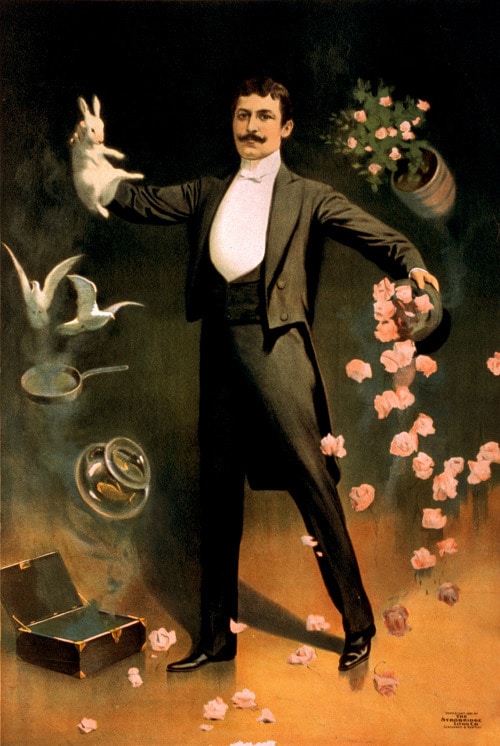
Let us discuss some of the other memes of capitalism. Jingoism, often masked as 'patriotism' or 'nationalism' it is a source of both protection and propagation for the capitalist system. Jingoism allows for the masses to become intoxicated by meaningless jargon (religion is one of the vessels of this) "We are exceptional!" "We are special!" "We are better!" these are simple but effective tools of manipulation and a puffing up of the egos of the masses so as to then allow for the second process. Dehumanization, this is applied to 'enemies' of the system, or just useful targets 'others' who will keep people focused on the target rather than the real problem; the capitalist system itself. Dehumanization and jingoism allows for the next meme, imperialism. Imperialism is a form of force, through war or other means of economic expansion, that leads to wealth extraction from the 'other' who are treated as subhuman or 'enemies' of the system.
Other memes are as follows, though I have touched upon them before, and will do so only briefly here. A military industrial complex to expand and increase the imperialist conquest; this system is fed by the other two, jingoism and Demonization. Police state, so as to protect the extracted wealth, and a prison industrial complex to control the disaffected populace of the host capitalist nation; who uses economic blackmail to maintain its stranglehold upon the massed here at home. In advanced capitalist economies we see the emergence of the welfare state; the last and ultimate defense in the capitalist bag of tricks; when all else is failing.
Yet, why is the welfare state the last defense? Simple, it is the slight realization of socialism, it allows the masses to peek at a socialist economy without having to give it to all of them in ways that are more desirable. The more socialized the economy, usually, the happier the people; as the necessities are seen as 'given' and luxuries see as 'earned' this allows for more opportunity, as the necessities are taken care of; thus the people work for their own pleasure. As working towards pleasure is much more enjoyable than away from pain. When one works for necessities, one is working away form pain, when one works for or towards enjoyment, one is working towards pleasure; a necessitous man is not a free man, nor a happy man.
When we see the reality of exploitation, that it produces misery and disunity; and capitalism feeds on disunity and division, for it creates a destructive form of synthetic scarcity amongst the people, as they see themselves (individual societies) as scarce products defending their existence from 'others' who would render them expired. We must combat this greatest meme 'individualism' if we are to see the man behind the curtain of our own despair is nothing but our own minds, we are working against ourselves by propagating these memes; to our own detriment. We are becoming memetic-engineers and it is time that we took responsibility for our minds and our beliefs; they must be reined in. Our systems, like our beliefs, like value, like morality, are arbitrary. We are in control of these things. Is it not time to take charge of these things?
The Implosion: How Capitalism Dies
Let us dispense with a very real truism, capitalism will outgrow itself and then cave in on itself; the only option left to it. How, well, what did capitalism initially do? It was a system by which one used monetary rationing to distribute goods. The monetary rations required usually denoted the object's scarcity; the more rations required the more scarce the item was, the fewer the less ect. We, for the most part, do not denote our rationing by this rule any longer; as scarcity is now a thing nearly divest of existence in the modern age of technology.
However, this is not entirely true. We, companies, can create scarcity; making 'limited time' offers or 'single printings' of things. This is not natural scarcity, this is intentional scarcity; usually used to promote the purchasing of said good, along with arbitrarily raising it's price for the arbitrary scarcity imposed upon it. This is fake scarcity and is in no way a positive outgrowth of the capitalist system; this is how you can tell the system is becoming over encumbered by it's own uselessness, it is now just pretending to be doing something useful or unique.
But another horror, a real one, is also taking place. Capitalism is creating real scarcity, in fact doing the very thing that it once was so useful at slowly ebbing away at, through the reality of climate change we are seeing an imposed form of scarcity unseen by the human race. Water, drinking water is becoming a scarce commodity world wide, yes some places have more than others and so that problem has not quite yet hit them, but the rest of the world is getting to know this very terrible fact. In America the fracking industry is poisoning many of the water-tables of the land, rendering water undrinkable in many towns and even small cities. The oil and coal industry is burning up fossil fuel, along with the fracking releasing methane (which is even worse than carbon dioxide), into the atmosphere that is leading to years long droughts that has rendered some parts of the middle east now uninhabitable; both due to the greed of the fossil fuel industry and the war industry, who keeps pushing for more bombing and intervening in even the most puny of problems.
The deforestation of our lands is leading to soil erosion and destabilization; leading to landslides and infertile land that is unable to hold crops. Our old growth and rain forests are being removed even though they supply the planet with valuable oxygen and medical treatment. Our oceans are acidifying at rates that are rendering some parts of the sea uninhabitable, and the acidification is killing off the plankton; which is the primary source of all of the world's oxygen, in fact, all of the plants on land only supply the world with around 30% of all oxygen, the rest is all plankton, and as of a year ago, 50% of all plankton are now dead due to water acidification. If the ocean dies, we die, if the old growth and rain forests die, we die.
Greed is literally destroying the planet, we are helping our own extinction, many other animals are now extinct now due to this; all of them dying out in the last hundred years following the industrial revolution. We are dying and we don't even know it. The mighty dollar is eating away at our very chances at future generations on this planet, and if we do not act soon, we will not even be able to adapt to save ourselves; as the planet will be uninhabitable.
Capitalism is killing us, yes, I do agree that if we could turn it towards more constructive things, renewable energy and sustainable behaviors, we could lengthen it's life; as the creation of the welfare state has done. Yet, I must ask, why do we cling so desperately to our outdated system of capitalism? It seems a terrible security blanket to hold to, as it exploits and abuses the very people in it's care. Why can we not grow out of this infantile prospective of commodity and arbitrary value? Why are we withholding what others need due to lack of monetary ration cards? Why are we so classist in our thinking and our desires? All of these things are not benefiting us or the planet; and the planet does not need us, but we need the planet. And so, I ask, how are environmental concerns not a concern to every person alive, and, why are we allowing our greed to trump our planet?

However, this is not entirely true. We, companies, can create scarcity; making 'limited time' offers or 'single printings' of things. This is not natural scarcity, this is intentional scarcity; usually used to promote the purchasing of said good, along with arbitrarily raising it's price for the arbitrary scarcity imposed upon it. This is fake scarcity and is in no way a positive outgrowth of the capitalist system; this is how you can tell the system is becoming over encumbered by it's own uselessness, it is now just pretending to be doing something useful or unique.
But another horror, a real one, is also taking place. Capitalism is creating real scarcity, in fact doing the very thing that it once was so useful at slowly ebbing away at, through the reality of climate change we are seeing an imposed form of scarcity unseen by the human race. Water, drinking water is becoming a scarce commodity world wide, yes some places have more than others and so that problem has not quite yet hit them, but the rest of the world is getting to know this very terrible fact. In America the fracking industry is poisoning many of the water-tables of the land, rendering water undrinkable in many towns and even small cities. The oil and coal industry is burning up fossil fuel, along with the fracking releasing methane (which is even worse than carbon dioxide), into the atmosphere that is leading to years long droughts that has rendered some parts of the middle east now uninhabitable; both due to the greed of the fossil fuel industry and the war industry, who keeps pushing for more bombing and intervening in even the most puny of problems.
The deforestation of our lands is leading to soil erosion and destabilization; leading to landslides and infertile land that is unable to hold crops. Our old growth and rain forests are being removed even though they supply the planet with valuable oxygen and medical treatment. Our oceans are acidifying at rates that are rendering some parts of the sea uninhabitable, and the acidification is killing off the plankton; which is the primary source of all of the world's oxygen, in fact, all of the plants on land only supply the world with around 30% of all oxygen, the rest is all plankton, and as of a year ago, 50% of all plankton are now dead due to water acidification. If the ocean dies, we die, if the old growth and rain forests die, we die.
Greed is literally destroying the planet, we are helping our own extinction, many other animals are now extinct now due to this; all of them dying out in the last hundred years following the industrial revolution. We are dying and we don't even know it. The mighty dollar is eating away at our very chances at future generations on this planet, and if we do not act soon, we will not even be able to adapt to save ourselves; as the planet will be uninhabitable.
Capitalism is killing us, yes, I do agree that if we could turn it towards more constructive things, renewable energy and sustainable behaviors, we could lengthen it's life; as the creation of the welfare state has done. Yet, I must ask, why do we cling so desperately to our outdated system of capitalism? It seems a terrible security blanket to hold to, as it exploits and abuses the very people in it's care. Why can we not grow out of this infantile prospective of commodity and arbitrary value? Why are we withholding what others need due to lack of monetary ration cards? Why are we so classist in our thinking and our desires? All of these things are not benefiting us or the planet; and the planet does not need us, but we need the planet. And so, I ask, how are environmental concerns not a concern to every person alive, and, why are we allowing our greed to trump our planet?
Wednesday, February 3, 2016
Anarcho-Capitalism: A Predictable Ride
I have a basic complaint against the concept of the 'free market' as it seems to me to be a thought experiment gone awry. We must acknowledger the basic fact that markets are systems made and enforced through law; thereby the state. Without the force of law, in modern economies, the monetary system would be difficult to enforce; as, in todays economy the currency is backed by the full faith and credit of nation states and the force they employ t defend said value of currency. However, there seem to be some people who think that one can establish a society based upon the 'free market' and this seems, to me, to be a very brutal proposition.
I cannot see how one could structure a society based upon market rules. To privatize all functions of the government would lead to a chaotic system of exploitation and mass failings of institutional priorities; aka, the systems of law and force would side with the highest bidder due to the fact that they are the most lucrative customers and they would wish for their patronage again. Also, the lack of an overarching system or rules would make the 'private court' system ununiformed and, along with the problem of 'wealth capture' creating rulings toward the wealthy, create a multisided justice system that would disproportionally side with the wealthy; as it would be more profitable to do so. I am left wondering how one would enforce any laws/guidelines/rules without a basic monopoly of force and overarching law; yet the problem of 'capture' in a 'market based society' makes this a nearly impossible to ensure this.
'Free market' based rules would produce a perverse incentive to side with wealth; as they would pay the bills; for privatized institutions of power, who would be charged for 'keeping the law'. The 'law on demand' produced by such an institution would be a terrible system. Also the level of redundancy would merely create a 'big private sector' whose scope and scale would be just as problematic; if not more so. Also, the problem of no over arching 'federal' rule system of basic law/rights having been established as how the 'overarching' legal framework of laws/rights is not even discussed by such persons; they seem to merely assume that humans will 'collectively agree' to an anarcho capitalist society, I do not know where this idea comes from.

I cannot see how one could structure a society based upon market rules. To privatize all functions of the government would lead to a chaotic system of exploitation and mass failings of institutional priorities; aka, the systems of law and force would side with the highest bidder due to the fact that they are the most lucrative customers and they would wish for their patronage again. Also, the lack of an overarching system or rules would make the 'private court' system ununiformed and, along with the problem of 'wealth capture' creating rulings toward the wealthy, create a multisided justice system that would disproportionally side with the wealthy; as it would be more profitable to do so. I am left wondering how one would enforce any laws/guidelines/rules without a basic monopoly of force and overarching law; yet the problem of 'capture' in a 'market based society' makes this a nearly impossible to ensure this.
'Free market' based rules would produce a perverse incentive to side with wealth; as they would pay the bills; for privatized institutions of power, who would be charged for 'keeping the law'. The 'law on demand' produced by such an institution would be a terrible system. Also the level of redundancy would merely create a 'big private sector' whose scope and scale would be just as problematic; if not more so. Also, the problem of no over arching 'federal' rule system of basic law/rights having been established as how the 'overarching' legal framework of laws/rights is not even discussed by such persons; they seem to merely assume that humans will 'collectively agree' to an anarcho capitalist society, I do not know where this idea comes from.
Another issue that I see in the flawed thinking of the anarcho capitalist system/free market fantasy is the problem of how money would be distributed and how one would enforce it's value. As currently our money is backed by the force of the federal government, it's faith upheld by us arbitrarily saying so, I again am left with a gigantic question mark on the problem of the enforcement of value without an institution of force to impose it. The argument against an 'absolute monopoly of force' as an argument against the state's existence ignores the basic reality that the state does far more to protect property and create a basic infrastructure that can allow commerce to flow, than one often thinks about. Money and it's value is arbitrarily determined by the state through force; I see no other way to determine wide spread value other than through the use of important resources, like food and water, and holding them hostage/withholding them in the use of basic exchange for necessary goods for survival; these would be the closest things to having any 'intrinsic value' in a human society. Gold, like paper or plastic, is worthless barring the use of force to enforce the concept of value upon them.
This brings me to the most important criticism of anarcho capitalism; that is will foster fascism or feudalism in one form or another. A common retort is that 'well violence is costly' this however bellies historical ignorance. The idea of 'violence is expensive' not acknowledging that obviously someone is making a profit off of that expense; in our modern world. This brings me to the argument that private military like agencies would eventually be used to enforce ''property rights' and even acquisition property through use of force; as the larger they are the more power they would have. Also, they could just confiscate the land they took, and what, some bigger group would fight them? Where would they be? What if the more powerful person bought out most of the 'employable institutions of force'? Remember, historically, conquest is about acquiring resources, not mindless conquest; it' profitable to conquer if you do it right. Imperialism is the conquest and subjugation of land; and capitalism is intrinsically linked to it in many ways, as was/is slavery and feudalism, even fascism if taken to the extreme. Government as the exclusive monopoly of force, if removed will create a power vacuum and an equal force of capability and or scope will take it's place; cartels or otherwise. As using imperialist force is not intrinsically just a 'government' interest due to the fact that expansion and acquisition of resources is costly but the gains outweigh the cost in the long term.
Violence can be a very good method for acquiring things, especially if no greater force should be concerned of. In an an-cap society, what is to stop people from freely getting together and say 'killing Steve" and taking his stuff? This isn't a lone person, this is a group, and let say the group is big, far larger than most, what will stop them? Say that group is a competitor with Steve, they want Steve gone, they want his things so as to expand their influence; who will stop them? If they are expertly trained and hire experts at implementing force, as we have described that there will be for hire institutions of force in this nongovernment economy based world, and they expand and take things for their own growth. Also, if we have 'private' institutions of contractible force (mercenaries) they are trained to implement force, average people who aren't trained fighters would be ineffective combatants. As trained killers can, compared to untrained ones, kill millions with fewer than hundreds if they're good at it. War/expansion is a profitable business, we wouldn't have contractors who do so if it weren't.
One must understand that empires were built by tribes fighting, some dying off while others expanded, in a war of attrition that was designed to remove competition for recourses; and it worked. It's an effective strategy when no one is big enough or strong enough to stop you. People don't have to adhere to the 'nonaggression principle' as it seems to be a general guideline, other humans can simply disagree and form a large enough group, build recourses and infrastructure and take over, its been done over and over again throughout history, failures of course, but plenty of successes. The French revolution, he Russian revolution, the American revolution, and many other war's for independence; all bloody revolutions against a system that a mass of people disagreed with, for whatever reason.
The concept of self ownership can also only be enforced through force, however, if someone with greater force decides to use force to take your property and 'make it theirs' than only another force of greater or equal power must be there to meet them. As those with greater wealth/power will amass larger monopolies of force through attrition, I again am left with the basic argument that an an-cap world would either be feudalistic or fascistic. Competition is a war of attrition, when competitors beat their opponents they take their market share; thus expanding. Again, imperialism may be expensive, but if you gain enough territory and resources the benefits outweigh the costs in the long run; as history shows, it's how empires form, they may fall but that takes time, and for that time they reign supreme. Social Darwinism can be perpetrated on a mass scale, no government required, again I point to guerilla warfare, no state required just basic organization and the fighters willing to do so. This seems an inevitable aspect of an anarcho capitalist system; due to a lack of a monopoly of force creating a power vacuumed.
Wage slavery would be an inevitable outcome because of this as there is no control against monopoly, again, it's a war of attrition and they take the market share of their competitors; the larger an institution becomes the harder it is to apply 'small business' style economics on them, it's almost impossible to boycott on a mass scale an international company. Also, the bigger they get, the can just buy out their competitors and ensure their market share. Remember, the American government was what broke up the monopolies in the gilded age, not the market. Wage slavery is easy as the larger the company will pay less, and the smaller companies can't afford to pay much more, as they
Wage slavery would be an inevitable outcome because of this as there is no control against monopoly, again, it's a war of attrition and they take the market share of their competitors; the larger an institution becomes the harder it is to apply 'small business' style economics on them, it's almost impossible to boycott on a mass scale an international company. Also, the bigger they get, the can just buy out their competitors and ensure their market share. Remember, the American government was what broke up the monopolies in the gilded age, not the market. Wage slavery is easy as the larger the company will pay less, and the smaller companies can't afford to pay much more, as they
don't have the funds, and the larger companies will get rid of the smaller ones; no wage competition.
You cannot operate on the idea of non-force because someone will see the 'opening of opportunity' in the idea that "hey, I can take things and no one will stop me; all I need are numbers" we are not all hive mind drones, we have opinions and feelings, and an anarcho capitalism system would foster one of the most negative human attributes on the planet; greed. Selfishness is not a virtue, but not everyone sees it that way, our scummy friend Ayn Rand taught us that; admiring psychopaths as superhuman, disgusting bitch she was.
The problem is that I cannot see any system working without a certain level of organization through a government like entity that would do all of the nitty-gritty behind the scenes work of bookkeeping; patent, trademark, copyright law, not that I like these things, but corporate institutions would hate their removal and so would small business owners. We, unfortunately, require systems of structure to survive and thrive here in the world. I believe a much more democratize/socialized system would help curb these extreme negatives set by the capitalist system; archaic thing that it is.
Tuesday, February 2, 2016
Aggregate Refuse Terminus: Art Divest Of Meaning
This is the age of monopolist art! The age of disgusting formulaic outcomes! The age of predictability and simplicity! The age of the stupefaction of the masses! The age of dregs. As time has ticked on we have watched the waning of creativity towards formula through the aggregate seizing of 'intellectual property' by large production companies for the mass dissemination of unimaginative fantasy strewn about the scape in a display so gaudy as to make even pornography seem tactful. We have watched as 'happy endings' have become the standard for storytelling, how adversity is beaten without cost, and how 'heroes' are heroic based on their feats rather than their suffering and sacrifice; a fucking disgusting display!
At every turn I find myself looking at vapid displays, hollow comedic attempts at low brow laughs intertwined with sloppy storytelling and empty characters. Each individual feels divest of soul and each scene a listless distraction. No one is worth caring for, in the story, and no one is interesting. The people are often empty vessels whose sole purpose is that of a hollow shell propelled through the empty space of progression until reaching their final destination at the conclusion. Nothing is being said or implied, what implications their may be are sad displays of pleading that should have been snuffed rather than seen, and the basic parameters of the overarching formula are oft never breached; for fear of loss of audience, and thereby profits.
What a harrowing experience of cringe worthy viewing and by all accounts a mind shredding investment in the grating nails of banality on the chalkboard of dreams. I find myself averting my eyes in embarrassment at the sight of such intellectual malfeasance, even demanding retribution, yet I round the corner and ever am I greeted with another plethora of artistic black-holes; devouring all possibility and radiating the cremated dust of artists.
This cannot stand! We have allowed the total capture of expression! Patent and trademark law has walled off whole sections of creativity in favor of the corporate expression of monetary gain over the individual expression of artistic endeavors. The corporate state is allowed protections of character, concept, and title all for the sole gain of profit over the art. This is cultural violence! We only harm ourselves by limiting our artistic scape of expression. These laws have hamstrung freedom of speech and expression, they have tied the hands of artists and forced them away in favor of the capitalist machine; the engine of profit speeding onward. These laws, patent and trademark, have infringed on the rights of all artists; they have unjustly bound us!
If any binding be allowed, and I hesitate to wall things off long, it should be short; allow the creator time to work with it as they will. Five years, this seems fair, and than entrance into the public domain; no less, and applied retroactively to all intellectual property across the board. No reapplying for an extension, no endless patent, five years. This in no way would stop the creator from using the property, as in public domain all persons can use it, it would just mean that others would be able to express themselves and show other possible applications of said idea. This is a liberation of expression, not a constraining of it! If ever a time for freedom of expression was needed, it is in art!
How does one tell a hero? It is after the story is told, can that hero look back, in the wake of sorrow and sacrifice, that bloody path of pain, and can they count the losses, weigh them and say "It was worth it" or perhaps, in dreaded inner silence, question will they 'Was it worth it?'

At every turn I find myself looking at vapid displays, hollow comedic attempts at low brow laughs intertwined with sloppy storytelling and empty characters. Each individual feels divest of soul and each scene a listless distraction. No one is worth caring for, in the story, and no one is interesting. The people are often empty vessels whose sole purpose is that of a hollow shell propelled through the empty space of progression until reaching their final destination at the conclusion. Nothing is being said or implied, what implications their may be are sad displays of pleading that should have been snuffed rather than seen, and the basic parameters of the overarching formula are oft never breached; for fear of loss of audience, and thereby profits.
What a harrowing experience of cringe worthy viewing and by all accounts a mind shredding investment in the grating nails of banality on the chalkboard of dreams. I find myself averting my eyes in embarrassment at the sight of such intellectual malfeasance, even demanding retribution, yet I round the corner and ever am I greeted with another plethora of artistic black-holes; devouring all possibility and radiating the cremated dust of artists.
This cannot stand! We have allowed the total capture of expression! Patent and trademark law has walled off whole sections of creativity in favor of the corporate expression of monetary gain over the individual expression of artistic endeavors. The corporate state is allowed protections of character, concept, and title all for the sole gain of profit over the art. This is cultural violence! We only harm ourselves by limiting our artistic scape of expression. These laws have hamstrung freedom of speech and expression, they have tied the hands of artists and forced them away in favor of the capitalist machine; the engine of profit speeding onward. These laws, patent and trademark, have infringed on the rights of all artists; they have unjustly bound us!
If any binding be allowed, and I hesitate to wall things off long, it should be short; allow the creator time to work with it as they will. Five years, this seems fair, and than entrance into the public domain; no less, and applied retroactively to all intellectual property across the board. No reapplying for an extension, no endless patent, five years. This in no way would stop the creator from using the property, as in public domain all persons can use it, it would just mean that others would be able to express themselves and show other possible applications of said idea. This is a liberation of expression, not a constraining of it! If ever a time for freedom of expression was needed, it is in art!
How does one tell a hero? It is after the story is told, can that hero look back, in the wake of sorrow and sacrifice, that bloody path of pain, and can they count the losses, weigh them and say "It was worth it" or perhaps, in dreaded inner silence, question will they 'Was it worth it?'
Monday, February 1, 2016
Night Watchman: The Small Big Government
It has come to my attention that within the anarcho-capitalist and minarchist movement the term of a night watchman state is used to describe the 'small government' necessary in order to maintain a capitalist society with little to no state beyond the night watchman state required. Firstly, this is absurd; to say that a night watchman state would be 'small' in scope and cost and second, it is also inefficient in the sense of accomplishing the desired goals, even within a capitalist system; which thrives on a big government nanny state/aggressive force.
From the get go one must recognize the basic cost of what a 'night watchman state' would entail. The night watchman state would be said to be in charge of protecting persons and property above all other duties; no roads, bridges or social programs, just protection. Let me go down the list of protective institutions. Fire department, police, military, judiciary. Now, ignoring that the state is the institution which prints and distributes money and would require an internal revenue service to be able to collect on the taxes required to sustain the night watchman state whose only goal is protection through coercive force, along with the problems of 'defining what protecting people' means. We are off to the races of understanding what such a government would be like.
Starting off, as everyone knows, a military isn't cheap. They are also a coercive force which would break the 'nonaggression principle'; but no one really cares about that. An army, a navy, an air force of any and all kinds requires vast sums of funds, it also requires a large number of people working on the front lines and behind the scenes; cleaning toilets, doing paperwork, medical work, trainers, weapons makers, engineers, pilots ect ect. A military, even a slim one would have to in the very least be able to provide an adequate defense; which would take a considerable budget depending on the size of the nation. Now, some small thinker may argue that a private military would work better, you know because competition, but than we would have competing institutions of coercive force vying against one another for employment; and, ya know, that might be a bit dangerous to have a bunch of institutions who make their living by using force feeling threatened that they won't have an income stream, they might violate the nonaggression principle, it's what they do after all, but as I said, no one cares about that.
We then go to the police force, and again we are confronted by the same problem in scale, but also with another issue, the law itself. Who is writing the law? This rolls in well with the next thing on the list which is courts. As the legal system is vast, requiring lawyers, bookkeepers, prison workers, officers of the peace, judges, and enormous institutions to determine and establish patent and trademark law and on and on it goes. The entire judiciary, police, bookkeeping institutions ect, would be required to be vast in scale and scope; perhaps more so than the military. This is, as one could imagine, very expensive. And again, some small minded person might say 'we could privatize them' and again I would ask 'do you want institutions who's sole job is using and enforcing coercion competing with one another?' might lead to a nasty violation of the nonaggression principle that we don't really care bout.
Next comes the fire department, which I could wholeheartedly see these people privatize, thus requiring people to take out fire department insurance in order to secure themselves and their neighbors from an uncontrollable blaze. What if the person doesn't have the insurance, will the department just let their house burn down and allow the flames to spread to other houses? Even if the other houses are insured they certainly would rather the blaze was contained, why wait for it to spread to their house; or surrounding houses? This is just inefficient.
Coming back to the problem of the judiciary though, no small thing, how will one determine/pass laws? What institution will govern these things? Who sets the rules and why? These things, like everything else, seem to go 'private sector...things work' no explanation as to how to achieve it. Competition seems good, but than you wouldn't want competition in the judiciary, than no law could be concrete because if you can just go court hopping until you find the one with the 'right laws' than how can you enforce those laws in another court's jurisdiction? If no overlapping singular law applies than how do you apply law? If the 'right laws' are always rulings in the direction of the richest, as the system would naturally evolve; due to the fact that that would be how the courts would make their money, if the wealthy are paying their bills, they will be hard pressed to rule against those who enrich them. How would justice reign at all if greed becomes the creed of all courts in the land, and if one court says different, they'll go fish for another one.
Also, let's get this out of the way, all of these institutions violate the 'nonaggression principle' in that they enforce the law and property rights by use of force; barrel of a gun. Now everyone will default to 'self defense doesn't count' when speaking about aggression against others. However, property damage is not defense of the self, it is defense of property, and since property is inanimate, one cannot use the argument of self defense, unless the person is making the argument that all property is an extension of the individual and thereby afforded the same rights thereby; as I believe most anacro-capitalist truly do believe. This would not be sound if we are to apply 'self-defense' as an argument, as I cannot see the an-caps saying that the institutions of force only can use force against those using force against actual people rather than property. If the an-caps wish to make this argument than they may as well wrap the entire thing into 'the only duty of the night watchman state is to protect people/property on the same level' and this would be a disastrous thing indeed.
It is at this point that the night watchman state would become the brute of the public and the enforcer of property. As the wealthy can acquire more and more property than those less affluent, the mass of people would inevitably become subject to an ever growing private sector whose rights and privileges would eclipse their own by default. Private courts headed by private lawyers all who cost a pretty penny and would be reliable in their servicing those who pay their institutional bills. We would see the inevitable creep of corruption and the use of these institutions through corrupt means to further squeeze the public and thereby further the capitalist system in its goals of profit maximization. The private sector would become intrinsically linked to the night watchman state until a fascist society emerged; this would happen with privatized institutions as well, just instead creating a feudalist society with competing corporate states warring between one another in a battle for influence, and thereby profits.
In other words, the night watchman state is a ridiculous concept in 'creating a small government state' as it uses some of the most costly institutions the government has and removes the most efficient ones in favor for 'making a buck' like roads and bridges. Not to mention that inevitable private capture of these 'weaker' institutions is all but certain, and the utilization of a 'privatized' version would create just as much hazard and just as much capture. Anarcho-capitalism doesn't work, minarcho-capitalism also doesn't work, capitalism is naturally a big institution and requires bureaucracy by its very nature; this is an obvious reality. Big companies require big protection on multiple fronts, legally and physically, to say that a 'smaller government' would be preferable to the capitalist system is a joke. Capitalism just doesn't want government to interfere with it's profits, that's about it, beyond that everything else is fair game and since businesses like to treat business like they are waging war, one must remember the old adage 'all's fair in love and war' we must think of this. Capitalism is not benevolent, capitalism is not kind or caring, capitalism is greedy, and greed has no love, greed has no loyalty, greed only wants more.

From the get go one must recognize the basic cost of what a 'night watchman state' would entail. The night watchman state would be said to be in charge of protecting persons and property above all other duties; no roads, bridges or social programs, just protection. Let me go down the list of protective institutions. Fire department, police, military, judiciary. Now, ignoring that the state is the institution which prints and distributes money and would require an internal revenue service to be able to collect on the taxes required to sustain the night watchman state whose only goal is protection through coercive force, along with the problems of 'defining what protecting people' means. We are off to the races of understanding what such a government would be like.
Starting off, as everyone knows, a military isn't cheap. They are also a coercive force which would break the 'nonaggression principle'; but no one really cares about that. An army, a navy, an air force of any and all kinds requires vast sums of funds, it also requires a large number of people working on the front lines and behind the scenes; cleaning toilets, doing paperwork, medical work, trainers, weapons makers, engineers, pilots ect ect. A military, even a slim one would have to in the very least be able to provide an adequate defense; which would take a considerable budget depending on the size of the nation. Now, some small thinker may argue that a private military would work better, you know because competition, but than we would have competing institutions of coercive force vying against one another for employment; and, ya know, that might be a bit dangerous to have a bunch of institutions who make their living by using force feeling threatened that they won't have an income stream, they might violate the nonaggression principle, it's what they do after all, but as I said, no one cares about that.
We then go to the police force, and again we are confronted by the same problem in scale, but also with another issue, the law itself. Who is writing the law? This rolls in well with the next thing on the list which is courts. As the legal system is vast, requiring lawyers, bookkeepers, prison workers, officers of the peace, judges, and enormous institutions to determine and establish patent and trademark law and on and on it goes. The entire judiciary, police, bookkeeping institutions ect, would be required to be vast in scale and scope; perhaps more so than the military. This is, as one could imagine, very expensive. And again, some small minded person might say 'we could privatize them' and again I would ask 'do you want institutions who's sole job is using and enforcing coercion competing with one another?' might lead to a nasty violation of the nonaggression principle that we don't really care bout.
Next comes the fire department, which I could wholeheartedly see these people privatize, thus requiring people to take out fire department insurance in order to secure themselves and their neighbors from an uncontrollable blaze. What if the person doesn't have the insurance, will the department just let their house burn down and allow the flames to spread to other houses? Even if the other houses are insured they certainly would rather the blaze was contained, why wait for it to spread to their house; or surrounding houses? This is just inefficient.
Coming back to the problem of the judiciary though, no small thing, how will one determine/pass laws? What institution will govern these things? Who sets the rules and why? These things, like everything else, seem to go 'private sector...things work' no explanation as to how to achieve it. Competition seems good, but than you wouldn't want competition in the judiciary, than no law could be concrete because if you can just go court hopping until you find the one with the 'right laws' than how can you enforce those laws in another court's jurisdiction? If no overlapping singular law applies than how do you apply law? If the 'right laws' are always rulings in the direction of the richest, as the system would naturally evolve; due to the fact that that would be how the courts would make their money, if the wealthy are paying their bills, they will be hard pressed to rule against those who enrich them. How would justice reign at all if greed becomes the creed of all courts in the land, and if one court says different, they'll go fish for another one.
Also, let's get this out of the way, all of these institutions violate the 'nonaggression principle' in that they enforce the law and property rights by use of force; barrel of a gun. Now everyone will default to 'self defense doesn't count' when speaking about aggression against others. However, property damage is not defense of the self, it is defense of property, and since property is inanimate, one cannot use the argument of self defense, unless the person is making the argument that all property is an extension of the individual and thereby afforded the same rights thereby; as I believe most anacro-capitalist truly do believe. This would not be sound if we are to apply 'self-defense' as an argument, as I cannot see the an-caps saying that the institutions of force only can use force against those using force against actual people rather than property. If the an-caps wish to make this argument than they may as well wrap the entire thing into 'the only duty of the night watchman state is to protect people/property on the same level' and this would be a disastrous thing indeed.
It is at this point that the night watchman state would become the brute of the public and the enforcer of property. As the wealthy can acquire more and more property than those less affluent, the mass of people would inevitably become subject to an ever growing private sector whose rights and privileges would eclipse their own by default. Private courts headed by private lawyers all who cost a pretty penny and would be reliable in their servicing those who pay their institutional bills. We would see the inevitable creep of corruption and the use of these institutions through corrupt means to further squeeze the public and thereby further the capitalist system in its goals of profit maximization. The private sector would become intrinsically linked to the night watchman state until a fascist society emerged; this would happen with privatized institutions as well, just instead creating a feudalist society with competing corporate states warring between one another in a battle for influence, and thereby profits.
In other words, the night watchman state is a ridiculous concept in 'creating a small government state' as it uses some of the most costly institutions the government has and removes the most efficient ones in favor for 'making a buck' like roads and bridges. Not to mention that inevitable private capture of these 'weaker' institutions is all but certain, and the utilization of a 'privatized' version would create just as much hazard and just as much capture. Anarcho-capitalism doesn't work, minarcho-capitalism also doesn't work, capitalism is naturally a big institution and requires bureaucracy by its very nature; this is an obvious reality. Big companies require big protection on multiple fronts, legally and physically, to say that a 'smaller government' would be preferable to the capitalist system is a joke. Capitalism just doesn't want government to interfere with it's profits, that's about it, beyond that everything else is fair game and since businesses like to treat business like they are waging war, one must remember the old adage 'all's fair in love and war' we must think of this. Capitalism is not benevolent, capitalism is not kind or caring, capitalism is greedy, and greed has no love, greed has no loyalty, greed only wants more.
Subscribe to:
Posts (Atom)